
A cracked phone screen creates one immediate question: fix it without overpaying. Then comes the choice that affects the price and your daily experience: écran original ou compatible. The answer is not automatically “original” and it is not automatically “cheap compatible.” It depends on your phone, how you use it, the condition of the device, and what the repair shop is actually installing.
A good quote should tell you what type of screen you are getting before work begins. If the answer is vague, ask again. Screen quality is not a detail you should discover after you have paid.
What “original” screen really means
An original screen generally refers to a genuine manufacturer display, often supplied as a service part. On some devices, it may be an original display recovered from another phone and professionally refurbished with new glass. These are not always the same thing, so the wording matters.
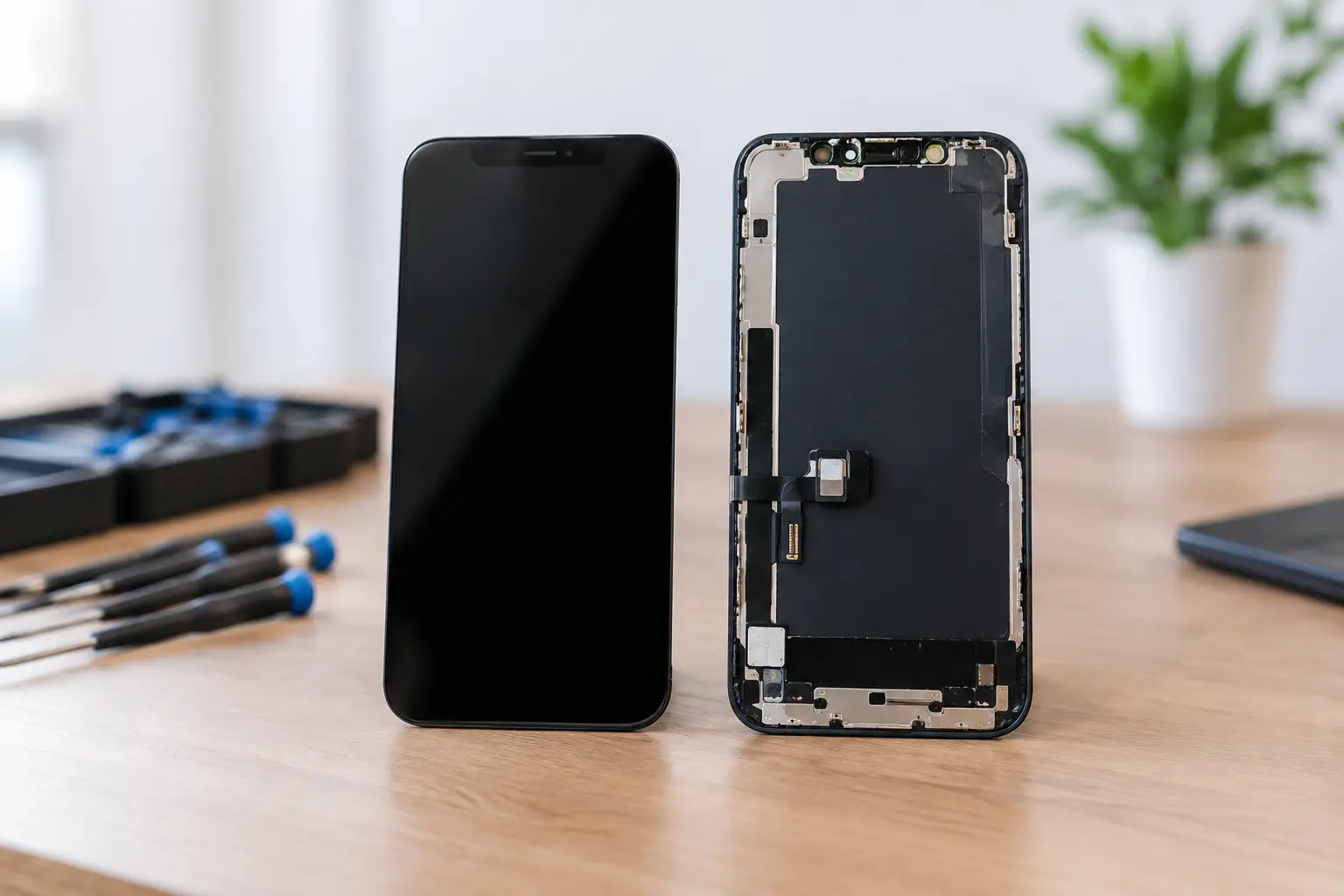
A genuine service display is usually the closest match to the screen that came with your device. Color accuracy, peak brightness, touch sensitivity, viewing angles, and refresh rate should perform as intended when the part is properly installed and configured. For newer OLED iPhones and premium Samsung models, that consistency can be noticeable.
Original parts are also more likely to preserve features tied closely to the display. Depending on the model, that can include adaptive brightness, high refresh-rate behavior, fingerprint sensor performance, or manufacturer diagnostics. Some modern phones may still show a parts notification after a repair because of software pairing requirements. That message does not automatically mean the screen is poor quality or that the repair was done incorrectly. It means the device recognizes that a component was replaced.
The trade-off is cost. Genuine screens are usually the most expensive option, and availability can vary by model. On an older phone with a lower resale value, putting a premium original screen on it may not make financial sense.
What a compatible screen can deliver
A compatible screen is an aftermarket replacement made by a third-party manufacturer. That broad label covers a huge range of quality. One compatible display can look and feel excellent. Another may be dimmer, use more battery, have weak touch response, or crack more easily. Treating every compatible screen as identical is where customers get burned.
For many repairs, a high-quality compatible screen is a practical choice. It can restore a cracked iPhone, Samsung, or other phone to dependable everyday use for less money. If you need your phone for calls, school, work apps, banking, maps, and messaging, a quality compatible part can be the smart value option.
The biggest differences usually show up in side-by-side comparisons. An aftermarket LCD installed in place of an OLED panel may have deeper bezels, lower contrast, and less vivid blacks. A lower-grade OLED may be less bright outdoors or slightly less responsive at the edges. These issues may not matter much on a budget device, but they matter more to someone who edits photos, games regularly, streams video, or uses their phone outdoors all day.
Compatible does not mean bad. Unspecified compatible does mean you should ask questions.
Écran original ou compatible: which one should you choose?
Start with the device itself. A recent flagship phone still worth several hundred dollars is often a better candidate for an original-quality display, especially if you plan to keep it for years or sell it later. Its screen is a major part of the experience and resale value.
A compatible screen often makes more sense when the phone is older, already has cosmetic wear, or serves as a backup, work, or family device. Spending less to get a dependable repair can be the right call when replacement costs are high and the rest of the phone works well.
Your habits matter too. Choose the best display quality available if you are sensitive to screen brightness, color, scrolling smoothness, or touch precision. Gamers, content creators, frequent travelers, and people who use navigation outdoors tend to notice screen differences faster. If your priority is getting a functional phone back in your hand without stretching the budget, a tested compatible option may be all you need.
There is also a middle ground. Some repair providers offer premium aftermarket OLED displays as well as lower-cost LCD alternatives. They should explain the difference plainly rather than calling everything “high quality.” A lower quote is only useful when you know what it leaves out.
Screen quality is only half the repair
Even the best part can perform poorly after a rushed installation. A screen replacement involves more than removing broken glass and connecting a new panel. The technician must inspect the frame, clean out fragments, protect cameras and sensors, transfer components correctly where required, and test the display before handing the device back.
A bent frame can prevent a new screen from sitting flush. Left untreated, it puts uneven pressure on the replacement and increases the risk of another crack. Water resistance can also be affected after any screen opening. Fresh adhesive and careful installation help, but no honest repair shop should promise factory water resistance after a damaged phone has been opened.
On iPhones, functions such as Face ID are not part of the screen itself, but they can be damaged by careless handling of the front sensor assembly. On Samsung and other Android phones, in-display fingerprint readers and curved OLED panels need extra care. The part choice matters, but technician skill protects the features you already have.
Questions to ask before approving the quote
You do not need to know repair jargon to make a sound decision. Ask whether the screen is genuine, refurbished original, premium compatible OLED, or basic compatible LCD. Then ask what changes you may notice in brightness, color, touch response, fingerprint scanning, or display messages.
Confirm whether the quote includes labor, adhesive, testing, and tax. A low parts-only number can become a different total at checkout. Also ask about the warranty and what it covers. A repair warranty should cover a defective replacement part or installation issue. It normally does not cover a new drop, liquid exposure, or impact damage after the repair.
Free diagnostics are useful when the damage may go beyond the screen. A black display does not always mean a screen replacement is the only fix. The problem could involve the connector, battery, motherboard, or impact damage around the frame. Replacing a display without checking the device first is parts swapping, not diagnosis.
When replacement is not the best move
Sometimes the smartest repair decision is to pause. If a phone has a shattered screen, failing battery, bent housing, charging problem, and intermittent touch issues, the total repair cost may approach the value of a tested refurbished replacement. That does not mean the phone is worthless. It may still have resale or parts value, and a technician can give you a realistic comparison.
The same applies to severe liquid damage. Installing a new screen may make the phone light up temporarily while corrosion continues elsewhere. A proper assessment can prevent you from paying for a display when the actual failure is on the board.
For Montreal-area customers, BuyCellFix can inspect the device, explain the screen options in plain language, and provide an upfront quote before work begins. The goal is not to push the most expensive part. It is to get you back to a phone that works reliably, with no surprises and no hidden upsells.
Before you approve any screen repair, ask to see the option in writing: what part is being used, what it costs, and what warranty comes with it. A clear answer makes the choice between original and compatible much easier.